The Emotional Hot Potato
Helping children navigate friendship conflict without choosing sides
"She has to say sorry!"
"No I don't! It wasn't even my fault!"
"Mom! Tell her!"
Within seconds, two children are crying, one is demanding an apology, the other is insisting they didn't do anything wrong, and the adults are left wondering: How did we get here?
Moments like these are incredibly common — not because children don't care about their friendships, but because they often care so deeply that they become overwhelmed.
One of the hardest parts of parenting isn't scraped knees or forgotten homework. It's watching your child hurt in a friendship. As parents, it's easy to feel pulled into becoming the detective, the referee, or the judge. We want to know who started it. We want children to be honest. We want everyone to apologize, forgive, and move on.
But what if friendship conflict isn't actually asking us to solve the argument? What if it's inviting us to understand what each child's nervous system is trying to communicate?
If the child says “she's not my friend anymore,” they don't mean it literally. They mean: my feelings right now are so big that I can't access my friendship skills. The friendship isn't gone. The feelings just got there first.
One of the biggest shifts I hope families experience is moving away from asking, "How do I stop this behavior?" and toward wondering, "What might my child need right now?
Because behavior is communication — but so are tears, silence, blame, arguments, repeated questions, and the child who simply can't seem to "let it go." When we slow down long enough to wonder what's happening underneath the behavior, we often discover something surprising: most children aren't trying to make life difficult. They're trying to solve a problem with the emotional tools they have available in that moment.
What's Really Happening Beneath the Behavior?
Imagine two children who both leave the playground upset after the exact same disagreement.
Child One
"Why did you do that?"
"You need to say sorry."
"But that's not what happened!"
Desperately searching for certainty — "I need to understand what happened so I know our friendship is still okay."
Child Two
"I didn't do anything!"
"It wasn't my fault."
"She made me do it."
Desperately trying to escape uncomfortable feelings — "This feels too big. I can't hold this right now."
From the outside, these children can look completely different. But underneath, they may actually have something important in common. Both are overwhelmed. They're just overwhelmed in different ways.
Neither child is choosing these responses because they're manipulative. They're responding with the best strategies available to them in that moment. That's why asking, "Who's right?" often isn't the most helpful first question. A better question might be: What is each child trying to accomplish with this behavior?
When we become curious before becoming corrective, children often become much more available for learning.
Sometimes Children Play Emotional Hot Potato
Have you ever watched someone try to hold a potato that's just come out of the oven? They don't calmly examine it. They don't carefully think about what to do next. They toss it. They drop it. They push it away — not because they're trying to get rid of the potato, but because it's simply too hot to hold.
Sometimes children do the very same thing with uncomfortable feelings: embarrassment, guilt, disappointment, fear of getting in trouble, shame, fear of losing an important friendship.
When those feelings suddenly become too intense, they can feel like a burning hot potato inside a child's body. Their nervous system isn't thinking, "How can I avoid responsibility?" It's thinking, "This is too much. I can't hold this right now."
From the outside, it can look like…
Blaming someone else.
Denying what happened.
Arguing over every detail.
Insisting another person caused the problem.
Shutting down completely.
Changing the subject.
Walking away.
From the outside, it can look like a child refusing to take responsibility. From the inside, it often feels much more like, "This feeling is burning me. I need to get it out of my hands."
Our first instinct as adults is often to hand the potato right back: "Nope. That wasn't your sister's fault." "Tell me the truth." "You need to apologize." But imagine trying to force someone to hold a potato that's still burning. They're probably just going to throw it again.
Instead, what if our first job wasn't getting children to hold the potato? What if our job was helping cool it down?
Cooling it down might look like…
Helping a child regulate before asking them to reflect.
Letting them know that making a mistake doesn't make them a bad kid.
Staying calm instead of adding more emotional heat through lectures, shame, or pressure.
Sitting beside them instead of standing against them.
Once the potato isn't burning quite so much, something remarkable happens. Children often become able to pick it back up. Now they can wonder: "Maybe I did hurt my friend." "I think I could have handled that differently." "I wonder how they felt."
Children become more able to hold hard feelings when they trust they won't have to hold them alone. And that is where accountability begins — not through pressure, but through emotional safety.
Children don't become more responsible because we make them hold the hot potato. They become more responsible because we help cool it down enough that they discover they don't have to hold it alone.
Why Apologies Aren't Actually the Goal
When children get into conflict, adults often become laser-focused on one thing: the apology. "Go tell your friend you're sorry." "You need to apologize before we leave." While apologies certainly have a place, they're often asked of children before they are actually capable of giving one.
Think back to the emotional hot potato. If a child's body is still flooded with embarrassment, fear, disappointment, or shame, asking for an apology is a little like asking someone to solve a puzzle while the fire alarm is going off. Their brain is still working to feel safe.
Perspective-taking — the ability to genuinely consider another person's experience — is one of the first things to become difficult when we're emotionally overwhelmed. This doesn't just happen to children. It happens to adults, too.
Have you ever found yourself thinking, "But that's not what I meant!" or "You're misunderstanding me!" before you were ready to hear someone else's side? Children experience this, too. They simply have fewer years of practice navigating it.
Instead of asking, "Can you apologize?" we might first wonder, "Is your brain ready to think about someone else's experience yet?" If the answer is no, that's okay. It simply tells us where to begin. Not with the apology. With regulation. One small step at a time.
Helping Friendships Feel Less Stuck
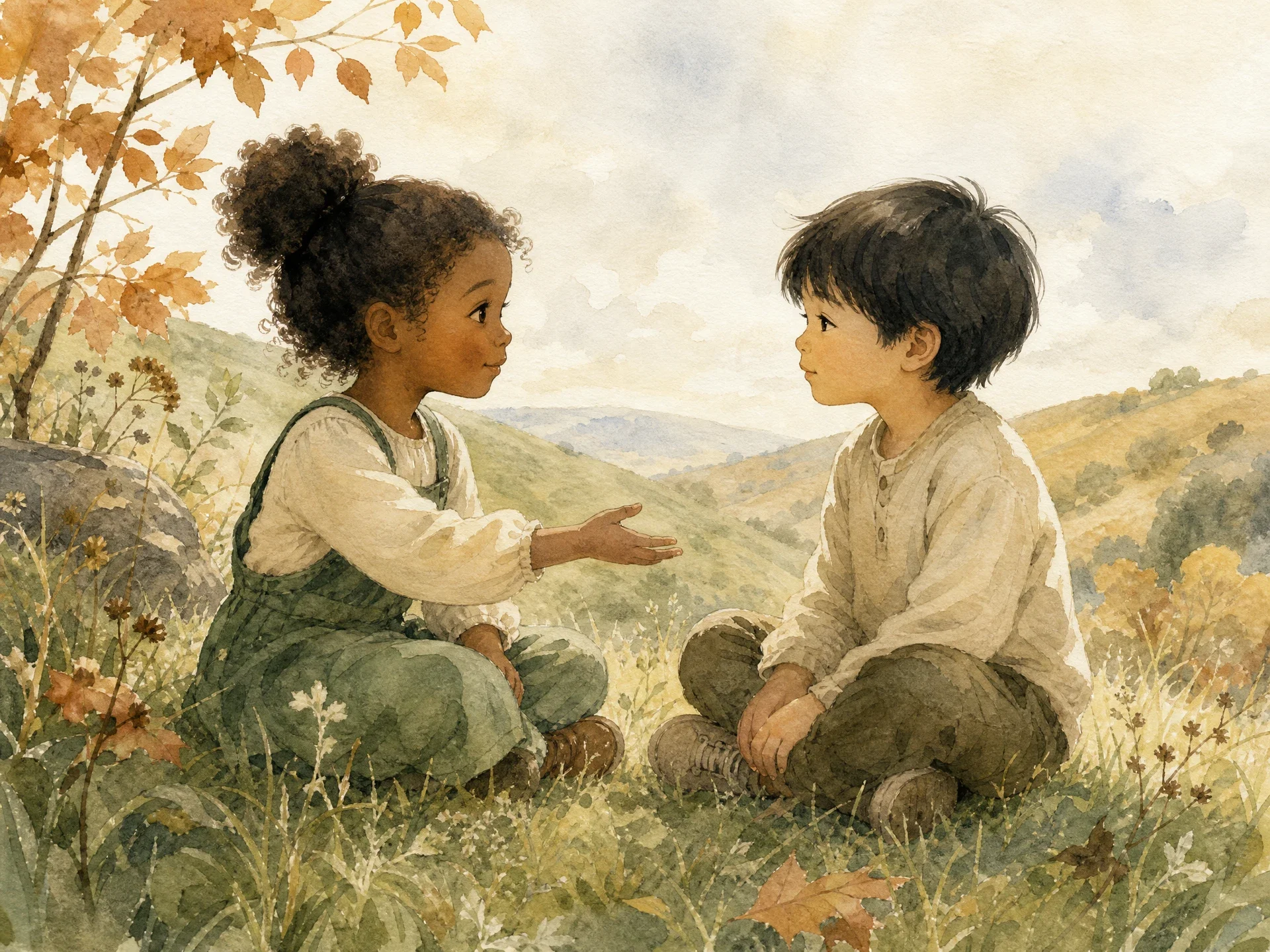
When children are overwhelmed, they often believe there is only one way for things to get better. Some become convinced: "If my friend doesn't say sorry, we'll never be okay." Others think: "If I admit I made a mistake, everyone will think I'm a bad kid."
Neither child is actually thinking about the friendship anymore. They're thinking about surviving the uncomfortable feelings happening inside their own body.
Instead of asking children to fix the entire friendship, we can offer them a much smaller question. One that feels possible.
"What could help this feel a little better?"
"How could we help your friendship feel a little less stuck?"
Notice that neither question assumes there is only one right answer. Sometimes making things better might include an apology. Sometimes it might mean listening. Sometimes it means taking a break and trying again later. Sometimes it's asking, "Can we have a do-over?" Sometimes it's simply returning to play together tomorrow.
Helping children think in terms of making things better rather than finding the perfect apology encourages flexible thinking and keeps the relationship — not the argument — at the center. We're helping the friendship grow.
We Don't Have to Agree to Understand
One of the most powerful friendship skills we can teach children is that two people can experience the very same moment differently. Imagine two children riding their bikes. One says, "You dared me to do it!" The other says, "You asked me to dare you." Both children may genuinely believe they're telling the truth. Both may feel hurt. Both may feel misunderstood.
As adults, we don't always have to determine whose memory is "correct." Instead, we can help children become curious. Let's wonder…
"It sounds like both of you remember this differently."
"I wonder what each of you was hoping would happen."
"I wonder what each of your bodies needed in that moment."
Curiosity creates space. Judgment usually closes it. Helping children understand one another doesn't require convincing either child that their experience wasn't real. Sometimes understanding begins with simply saying, "Tell me what that felt like for you" — then helping the other child become a really good listener. Not to decide who was right. But to understand.
The opposite of blame isn't responsibility. The opposite of blame is shared understanding.
Teaching Children to Listen for Needs
One activity families can practice long before conflict happens is learning to ask one another: "What do you need right now?"
"I need a break."
That's okay.
"I need you to listen first."
That's okay.
"I need to know we're still friends."
That's okay.
"I don't know what I need yet."
That's okay.
The goal isn't raising children who always know exactly what they need. The goal is raising children who become more aware of their own feelings and more curious about someone else's.
“Let's be really good listeners — not just to words, but to what each person's heart and body might be asking for.
When children begin listening for needs instead of listening for who is wrong, something shifts. They become teammates again. And that's where friendships begin finding their way back.
Becoming a Friendship Coach Instead of a Referee
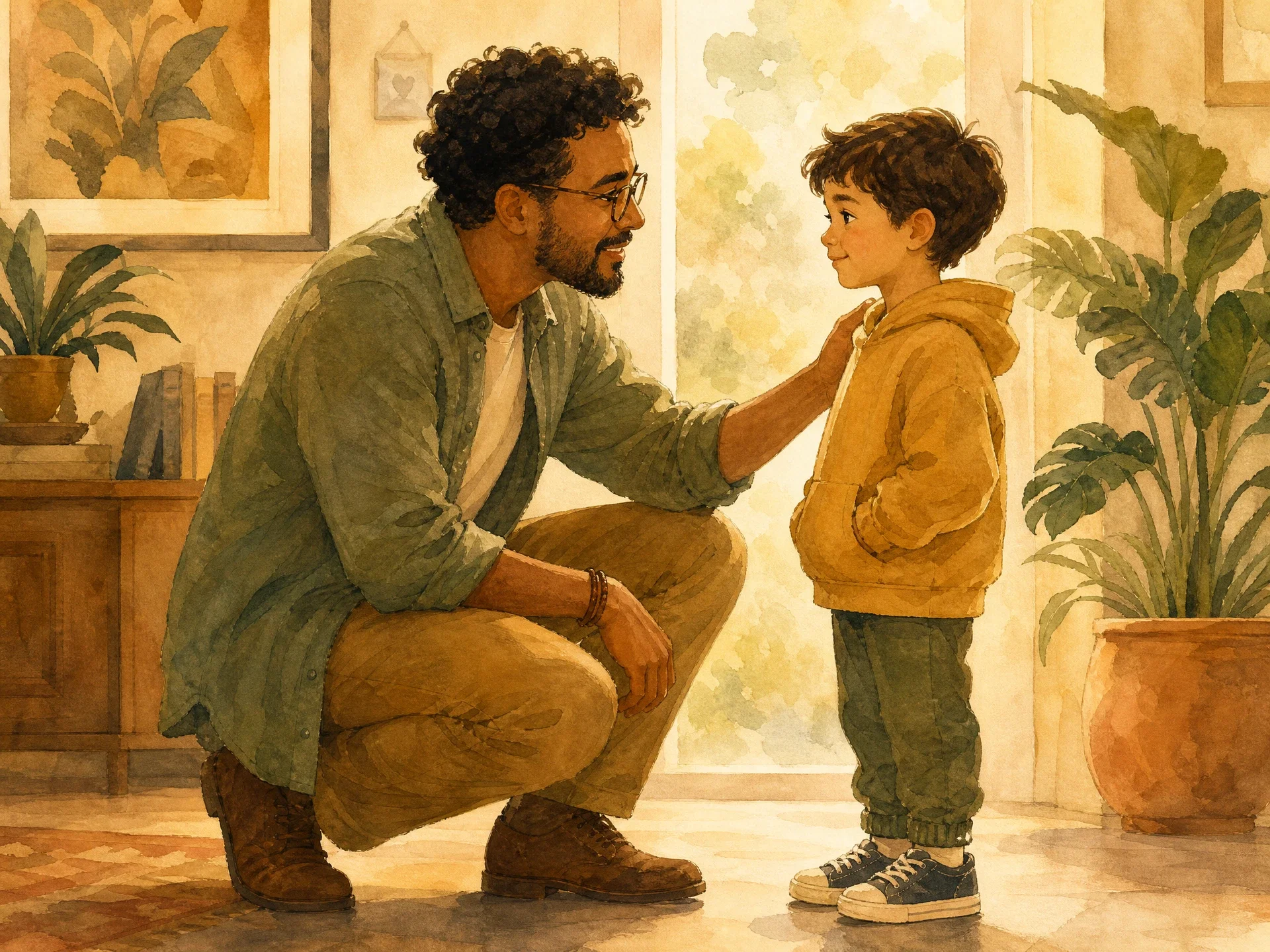
When children argue, it's easy to slip into the role of detective. Who started it? Who is telling the truth? Who should apologize? Sometimes we do need to step in to keep everyone physically and emotionally safe. Safety always comes first.
But once everyone is safe, our role shifts. Instead of becoming the referee, we can become the coach.
⚖️
Referee
Decides who was right.
🌱
Coach
Helps everyone learn.
That doesn't mean we ignore hurtful behavior or avoid accountability. It means we recognize that our long-term goal is much bigger than solving today's disagreement. We're helping children build the skills they'll use in friendships, marriages, workplaces, and families for the rest of their lives. We're not lowering the bar — we're building the bridge.
When conflict happens, instead of asking, "Who should say sorry?" try wondering, "What skill is this an opportunity to practice?" Maybe today is practicing listening. Maybe it's taking space before talking. Maybe it's learning that another person can experience the same event differently. Maybe it's discovering that friendships can survive hard moments.
Conflict isn't always getting in the way of learning. Sometimes conflict is the learning.
Circle of Security Parenting program™
The Circle of Security Parenting program™ reminds us that children need adults who are Bigger, Stronger, Wiser, and Kind. During friendship conflict, that doesn't mean deciding who wins. It means becoming the calm, steady presence children can borrow from until they're able to think, listen, wonder, and reconnect for themselves.
Sometimes our greatest gift isn't solving the problem. It's staying close enough that they discover they don't have to solve it alone.
This process may take longer for some children than others, especially children who experience the world differently, process social situations deeply, or need more time to organize big feelings.
Try This at Home: "Ways to Make Things Better"
Rather than creating a family "apology chart," try creating a Ways to Make Things Better poster together. During a calm moment, ask your child: "When a friendship feels stuck, what are all the different ways we can help it feel a little better?" There are no wrong answers.
Ways to Make Things Better
Your family's list might include…
Listen all the way to the end.
Ask what the other person needs.
Say, "Can we try again?"
Take a break and come back later.
Draw a picture or write a note.
Offer help.
Play together again tomorrow.
Ask for a do-over.
Say, "I didn't mean for that to happen."
Say, "I understand why that hurt."
Ask, "What would help make this better?"
Sit together quietly.
Give someone space.
Invite them back into play.
The goal isn't memorizing the list. The goal is helping children realize that friendships aren't held together by one perfect apology. They grow stronger through lots of little moments of listening, understanding, flexibility, and trying again.
What We're Really Trying to Teach
If children grow up believing that every disagreement has one winner and one loser…
they'll spend a lot of energy proving they're right.
If children grow up believing that mistakes make them bad...
they'll spend a lot of energy hiding them.
If children grow up believing that relationships end whenever someone gets hurt…
they'll spend a lot of energy protecting themselves instead of connecting with others.
But when children experience adults who stay calm… who wonder before they judge… who help organize big feelings… who stay close during mistakes… something different begins to grow.
Children learn:
"I can make mistakes and still be loved."
"I can hurt someone and still find my way back."
"My friend can see something differently without either of us being wrong."
"We don't have to fix everything immediately."
"We can help our friendship feel less stuck."
"We can find a way to make things better."
Those are the relationship skills that last far beyond childhood.
Children don't need us to solve every friendship problem. They need us to help them build the skills to solve friendship problems over time.
A Final Thought
The next time your child can't stop talking about what happened… the next time they insist someone else is to blame… the next time they demand an apology…
Pause before asking, "How do I stop this behavior?"
Instead, wonder: "What might my child be carrying that feels too heavy to hold alone?"
Then stay close enough to help. Not by carrying it for them. Not by pretending it isn't there. But by helping cool the emotional hot potato until it no longer burns quite so much.
Because children don't become emotionally healthy by never experiencing conflict. They become emotionally healthy by discovering that big feelings can be understood. That mistakes can become opportunities for learning. That hard conversations can become opportunities for connection.
And that the strongest friendships aren't the ones without conflict.
Friendships don't become strong because children never get stuck.
They become strong because, little by little, children learn:
"Even when we get stuck… we can find our way back."
Wondering what this looks like for your child?
Every article here is general by nature — but your child isn't general. Let's talk about what you're seeing.
Schedule a Discovery Call
Articles in the Wonder Brightly Resource Library are educational and reflect general developmental information. They are not therapy, medical advice, or individualized recommendations for your child. Every child (and family) is wonderfully unique — if you'd like personalized support, I'd love to talk.